10+ Years of Trusted Service

Do you ever stop to think about how garage doors work? You press a button, the door lifts smoothly, then closes again without much effort. Most homeowners use their garage door every day without giving a second thought to what makes it move or how it stays safe. Yet it is one of the largest and heaviest moving systems in your Rockford, IL home. When you understand how it is designed to lift, balance, and lower itself, it becomes easier to spot problems early and avoid unexpected repairs.
Now, let us take a closer look at how your garage door works and what keeps it operating smoothly every time it opens and closes.
The Basics Behind How Garage Doors Work
At its core, a garage door uses a balance system to lift and lower a very heavy door with minimal effort. Even though your door may feel light when it moves, it can weigh hundreds of pounds. The reason it feels manageable is that the system balances that weight using springs, tracks, and rollers that work together as one unit.
When you press the button or lift the door by hand, you are not lifting the full weight. Instead, the system distributes the load so the door moves with ease and safety. Once you understand this balance, the rest of the garage door parts become much easier to understand.
Main Parts of a Garage Door System
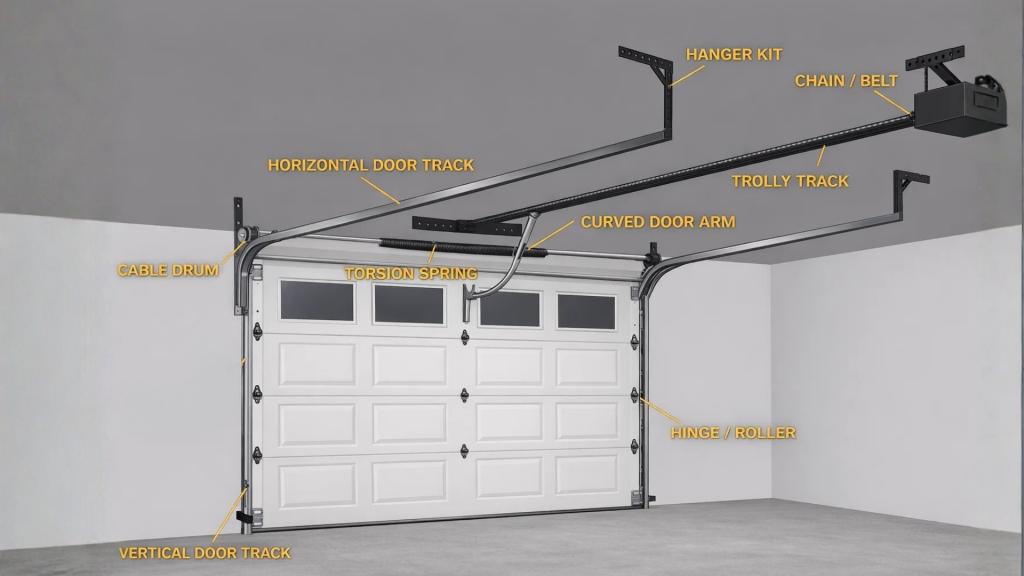
Here are the garage door parts explained in simple terms:
Garage Door Panels and Sections
Most modern garage doors use sectional panels instead of one solid piece. Hinges hold the panels together, allowing the garage door to bend as each section curves and slides overhead. A damaged or warped panel can hinder the door’s proper movement. This additional stress can eventually affect how the garage door operates as a whole and result in more serious repair problems.
Tracks and Rollers
Tracks direct the door as it opens and closes, while rollers allow it to move smoothly. Think of the tracks as rails and the rollers as wheels. When rollers wear down or tracks shift out of alignment, the door may shake, squeal, or feel jerky. These small signs often point to the need for garage door maintenance before a bigger failure happens.
Hinges and Brackets
Hinges connect the door panels and allow them to bend as the door moves. On the otherhand, brackets hold important hardware in place, including rollers and lift cables. Because brackets support a lot of tension, they must stay secure. Loose or damaged brackets can throw the entire system off balance, which is why they should never be ignored.
Garage Door Springs: The Heart of the System
If there is one part that truly explains how garage doors work, it is the springs. Springs counterbalance the door’s weight so it can lift and lower safely. Without them, your opener would struggle, and manual lifting would feel nearly impossible. Springs also sit under extreme tension, which makes them dangerous to handle without proper training.
Torsion Springs
You will find torsion springs positioned above the garage door opening. They twist as the door moves, using torque to lift the door evenly. Many newer and heavier doors use torsion springs because they provide better balance and a longer lifespan. When a torsion spring breaks, the door often will not open at all.
Extension Springs
Extension springs run along the sides of the door. They stretch and contract as the door moves. These springs appear more often on older systems. While they work well, they can wear out faster and require safety cables to reduce risk if they snap.
How Garage Doors Work with Openers
Think of the opener as the command center of the garage door. In a residential garage door system, the opener connects the mechanical parts with the controls you use every day. It manages speed, travel limits, and safety responses while working in sync with the rest of the system. When that connection breaks down, the door may behave unpredictably.
Drive Types in Garage Door Openers
- Chain drive openers use metal chains and offer durability at a lower cost, but they can be noisy.
- Belt drive systems run quieter and work well for attached garages.
- Screw drive openers use fewer moving parts.
- Direct drive systems move the motor itself along the rail.
Each option affects noise, maintenance needs, and performance.
Motor, Trolley, and Rail Explained
The motor powers the system, while the trolley moves along the rail to pull the door open or push it closed. When the motor activates, it transfers motion through the trolley, which connects directly to the door. If the trolley disconnects or the rail shifts, the door may stop responding.
Wall Controls and Remote Signals
Wall buttons and remotes send signals to the opener using radio frequencies. When the opener receives the signal, it activates the motor. Modern systems may also connect to smart devices, giving homeowners more control and security.
How Garage Doors Work with Safety Features
Today’s garage doors include safety features that protect people and property while the door moves. These systems became mandatory in 1993 under a rule from the Consumer Product Safety Commission and remain a critical part of safe garage door operation.
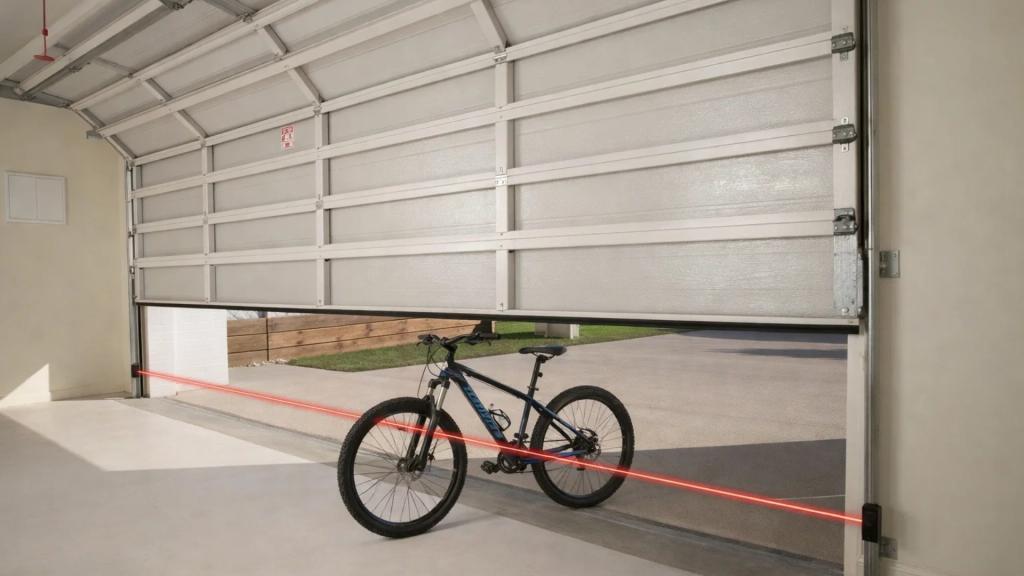
Photo Eye Sensors
Photo eye sensors sit near the bottom of the door opening. They create an invisible beam across the door. If something breaks that beam while the door closes, the door stops and reverses. This feature helps prevent injuries and property damage.
Auto-Reverse Mechanism
The auto-reverse system detects resistance. If the door hits an object or feels unusual pressure, it automatically reverses direction. This simple feature has prevented countless accidents and remains a key part of every residential garage door system.
Manual Release Handle
The manual release handle allows you to disconnect the door from the opener. This feature becomes essential during power outages. Every homeowner should know where it is and how to use it safely.
How Garage Doors Work Smoothly With the Right Maintenance Habits
Regular garage door maintenance helps you catch small issues before they turn into costly repairs. Here are a few easy tasks that can make a big difference in how your door performs and how long it lasts:
- Check all visible hardware like bolts, brackets, and hinges to make sure nothing is loose or shifting.
- Listen closely when the door opens and closes, and pay attention to new noises like grinding, squeaking, or rattling.
- Watch how the door moves and notice if it looks uneven, jerky, or slower than usual.
- Use the right garage door lubricant on rollers, hinges, and springs to limit friction and extend their lifespan.
- Test the balance of the door occasionally by disengaging the opener and lifting the door halfway to see if it stays in place.
- Schedule a professional inspection at least once a year, especially if your door is older or heavily used.
At Titan Garage Doors Rockford, our certified technicians see firsthand how minor wear can turn into major damage when maintenance is delayed. Staying proactive helps preserve your system’s performance, safety, and overall lifespan.
Your Local Choice for Safe, Reliable Garage Door Repair
When your garage door will not open, sound off, or feel unsafe, you need help fast. Titan Garage Doors Rockford offers emergency garage door repair across Rockford and nearby areas, like Winnebago and Machesney Park, IL. With free estimates and flexible monthly payment options, getting professional help does not have to wait.
Call (779) 704-4707 now and let our local team handle the problem the right way.